

Catnip treats occupy an odd middle ground. They're not just treats, because they carry a real dose of the herb your cat reacts to. They're not just catnip either, because they're wrapped in a portioned, food-grade format your cat eats rather than rolls in. Used well, they earn their spot in the routine. Used badly, they're just calorie-heavy snacks.
This post covers what catnip treats actually do, when they work best, how they compare to loose catnip, and how to fit them into a play or reward routine without turning them into filler.
What catnip treats actually are
A catnip treat is a small piece of food, usually a crunchy morsel, made with real catnip mixed into the ingredient list. The catnip is at a low percentage of the total (well below the 2% safe-formulation ceiling for most reputable brands), which means the cat gets a mild, controlled hit rather than the full-body roll you'd see with a pile of loose catnip.
The delivery method matters more than most people realize. When a cat eats catnip instead of sniffing it, the response shifts. Sniffed catnip produces the excited rolling-and-rubbing behavior most people picture. Eaten catnip is more mellow, more like a light sedative than a stimulant. Both are safe. They just do different things.
This is why catnip treats work well as a wind-down reward, and less well as a play trigger. If you want your cat energized, use loose catnip or a catnip spray. If you want them content and settled, treats are the better tool.
How they differ from loose catnip
Three main differences, all practical:
Dosage is predictable. A treat has a set amount of catnip per piece. You know what you're giving. Loose catnip is easier to over-scatter, especially with a cat that likes to roll in a big pile.
Mess is contained. Loose catnip ends up in the rug, the couch cushions, and eventually the vacuum bag. Treats stay where you put them.
Portability is real. A jar of treats fits in a drawer or a bag. Loose catnip needs an airtight container to stay fresh, and if the container opens in a bag, the whole bag smells like catnip forever.
The trade-off: loose catnip works better for scent-driven play, and it costs less per active ingredient. Treats are more expensive per gram of catnip but easier to manage day-to-day. Most households use both, for different jobs.
When treats work best
Four moments where catnip treats do more than a regular treat would:
After a hard play session. The cat is winding down. A couple of treats reward the play and nudge them toward a nap instead of a second wind. This is probably the single best use of catnip treats.
Before a stressful moment. Vet visits, guests arriving, thunderstorms. A treat given ten to fifteen minutes ahead can take the edge off. Not a fix for serious anxiety, but a real assist for mild situations.
As a training reward. If you're teaching a cat to use a carrier voluntarily, come when called, or accept nail trims, a catnip treat is more motivating than a plain kibble treat for most cats. The novelty holds up over more repetitions.
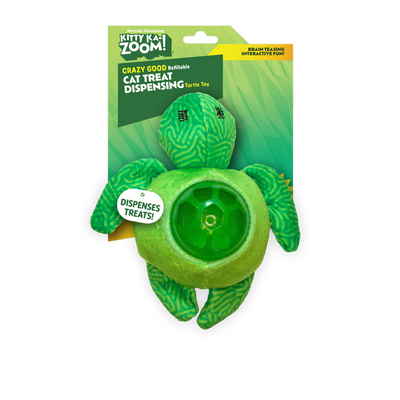
Loaded into a puzzle dispenser. Treats give a puzzle toy a real payoff. A cat working the Zoomie Sea Turtle dispenser for plain kibble might quit after two minutes. Load it with catnip treats and the same session runs fifteen or twenty.
Ka-Zoomies Catnip Treats
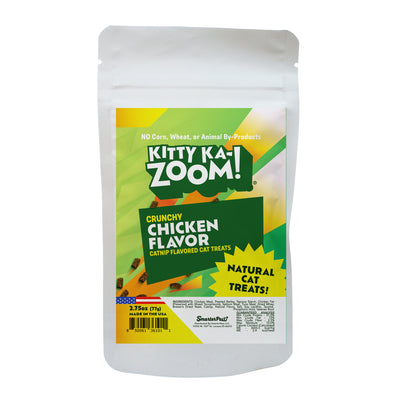
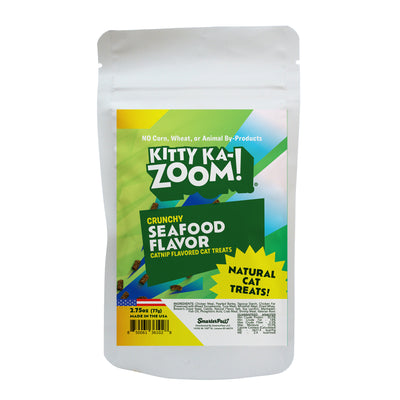
Ka-Zoomies chicken vs seafood: which one
The Ka-Zoomies lineup runs two flavor tracks. Both use the same catnip base, and both use real meat as the primary ingredient. The difference comes down to what your cat prefers.
Chicken treats tend to be the safer bet for cats that haven't shown a strong flavor preference. Chicken is the most widely accepted protein in cat food generally, and picky eaters are less likely to reject it.
Seafood treats tend to be the stronger response for cats that already love fish. If your cat swarms the kitchen when you open a can of tuna, seafood is likely to hit harder as a reward. Some cats also respond to seafood specifically as a novelty flavor if their regular food is chicken-based.
If you're not sure, start with chicken and see how the cat responds. Add seafood later as a variety option — the switch between flavors can extend novelty and keep treats motivating longer than a single flavor would.
How much and how often
Treats are treats. The general rule for cats is that treats of any kind should stay under 10% of daily calories, and catnip treats are no different. For most adult cats, that's three to six treats per day depending on size.
Frequency matters more than absolute amount. A cat that gets treats every day at the same time starts anticipating them, which reduces the novelty and the behavioral impact. Randomize the timing. Skip days. Save treats for the moments where you actually want the effect — a hard play session, a stressful event, a training milestone.
One more note: catnip response can dull with over-exposure. A cat that gets catnip in some form daily may respond less to any single dose. If treats are part of your routine, keep loose catnip and catnip spray on rotation rather than as everyday tools.
Pairing treats with play
The routine that gets the most out of both categories: play first, treat second. A ten-minute play session with a wand or refillable kicker, followed by two or three treats while the cat is winding down. This does three things at once — it burns physical energy, it rewards the play behavior, and it eases the transition to rest.
The reverse order works less well. Cats that eat treats first often lose interest in the play session that follows. The mild sedative effect of eaten catnip, combined with a full stomach, makes the couch more attractive than the wand toy.
For more on structuring play sessions, the guide to tiring out a hyperactive cat covers timing and duration.
What to watch for
A few honest caveats on treats worth knowing before you buy:
Not all cats respond to catnip. Around 30% of cats have no reaction to catnip in any form, treats included. If your cat is a non-responder, the treats will still work as a plain crunchy treat, but you won't see any behavioral effect.
Kittens under six months usually don't respond either. The catnip response develops with maturity. Treats given to a young kitten function purely as food, not as behavioral tools.
Read the ingredient list. Some catnip treats use very little real catnip and heavy artificial flavoring. Look for real catnip listed by name near the top of the ingredients, and real meat as the primary protein.


0 comments