

Your cat is not bored because they're lazy. They're bored because every meal, every treat, every snack lands in the same bowl in the same spot at the same time. The food arrives with zero effort required. A treat dispenser changes that equation, and the change is bigger than you'd expect.
Here's the part most people don't realize: mental exertion tires a cat out faster than physical activity. A cat that spends 15 minutes problem-solving a rolling dispenser is more genuinely tired than a cat that sprinted across the living room for 5 minutes. The puzzle burns more than the sprint. That's why treat dispensers belong in the enrichment conversation alongside wand toys and kickers, not off to the side as a novelty.
What makes a good cat treat dispenser
Not all dispensers are worth your time (or your cat's). The difference between one that gets used for a week and one that becomes a daily fixture comes down to a few things.
Adjustable difficulty. This is the most critical feature. A dispenser with only one opening size will either be too easy (cat figures it out in 90 seconds and walks away) or too hard (cat tries twice, gives up, ignores it forever). You need the ability to start wide and narrow down as your cat gets better. Without that adjustment, you're buying a single-use experience.
Size and weight. The dispenser should tip and roll when batted, not sit like a doorstop. Too heavy and it won't move; too light and it flies into the wall and spills everything at once. The sweet spot is a toy that requires some effort to knock around but responds predictably to a paw swipe.
Easy to fill and clean. If it takes two minutes to reload between sessions, you won't bother. If treats get stuck in a corner you can't reach, it gets gross and your cat smells it (and gets frustrated). A clean, simple fill port and a smooth interior matter more than they sound.
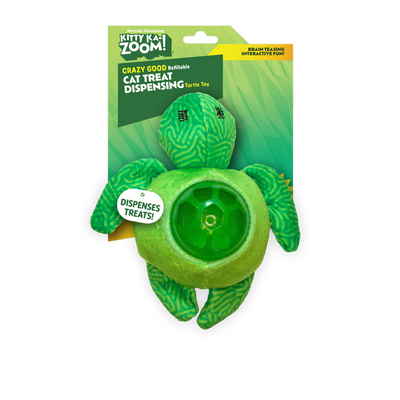
The Zoomie Sea Turtle from Kitty Ka-Zoom hits all three. The rolling shell design means it moves the way a cat expects something to move when they bat it. The opening is adjustable so you can dial in the right difficulty for your specific cat. And it's sized for Ka-Zoomies treats, which means the treats actually tumble out cleanly instead of clogging.
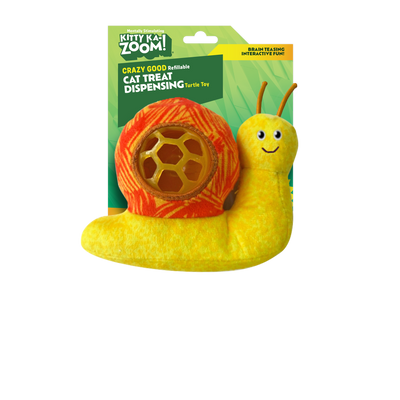
The Zoomie Treat Dispensing Snail is a second option in the same line, with a different shape that suits cats who prefer to bat and investigate rather than chase a roll. Some cats don't engage well with a round toy that scoots away from them. A lower, slower shape that stays in place and rewards a deliberate paw swipe can be the difference between a cat that uses a dispenser and one that ignores it. If the Sea Turtle hasn't clicked with your cat, the Snail is worth trying before you write off the category entirely.
What to fill it with
Treat choice matters more than most people think. The wrong fill can make even a good dispenser frustrating.
Small, dry treats are what you want. They tumble freely when the dispenser rolls, fall out of the opening without snagging, and don't leave a residue inside. Soft treats clump. Large treats block. Anything moist or sticky is going to foul the interior after one session.
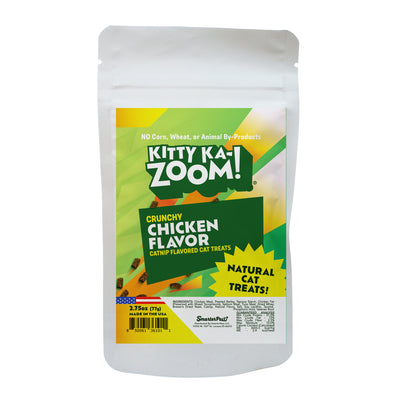
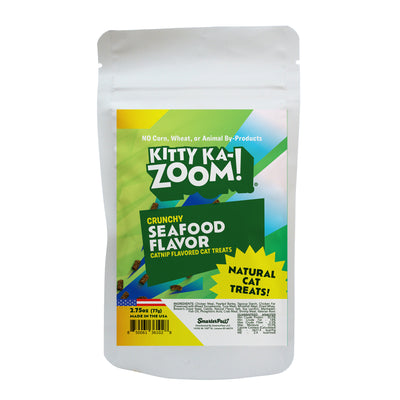
Ka-Zoomies Crunchy Chicken and Ka-Zoomies Crunchy Seafood are sized specifically for rolling dispensers like the Sea Turtle. They're small enough to move around freely inside the shell but not so small that they all spill at once on the first roll. Both flavors are consistently accepted, which matters for reluctant cats who might bail on an unfamiliar smell.
For early sessions, go light on the fill. 10 to 15 pieces is the right range to start. A lighter fill means your cat earns treats faster in the first few attempts, which keeps them engaged and builds the behavior. Load it to the brim on day one and your cat may work it for two minutes, get tired of the effort-to-reward ratio, and decide the whole thing isn't worth it.
Cat Treats for Dispensers
Three ways to use a treat dispenser
There's no single right way to use a treat dispenser. How you use it shapes what your cat gets out of it. These three approaches cover the main use cases, and each one produces a different result.
Solo enrichment. Fill the dispenser, place it on a hard floor (carpet slows the roll), and leave the room. Cats often engage more when you're not watching. This works well when you're away or occupied with something else. When you're back, collect it and refill. This is the core use case and it works on its own schedule.
Post-play wind-down. After a wand session, a cat is still in hunting mode. High heart rate, pupils wide, looking for the next thing to chase. Dropping a loaded dispenser on the floor right after the wand goes away gives them a task to transition into. The mental shift from "chasing" to "solving" is part of the wind-down. Keep the fill lighter for this use (8 to 10 pieces), since it's not a full enrichment session, just a bridge.
Mealtime enrichment. Replace one meal per day with the dispenser. Not all meals, just one. The goal here is to add work to eating so the experience is more satisfying. Keep the difficulty lower than you would for an enrichment session (mealtime shouldn't be frustrating), and use Ka-Zoomies Chicken or Seafood since they're complete-ingredient snack treats. Keeping a regular bowl meal on other days preserves the novelty of the dispenser.
How to get a reluctant cat started
Not every cat walks up to a treat dispenser and immediately understands what to do. Some take a few sessions. Some take a week. This is normal, and it doesn't mean the dispenser won't work.
Start on the widest opening. The goal in session one is not challenge. It's first contact. Your cat should be able to get a treat out quickly so they understand the basic mechanic: bat this thing, treat comes out. If nothing comes out in the first few tries, most cats disengage and don't come back.
Put a treat right at the opening. Place one treat so it's visible and nearly falling out before you set the dispenser down. First contact should be immediately rewarding. That first treat sets the expectation for everything that follows.
Set it down and walk away. Don't hover. Don't demonstrate. Don't roll it toward your cat. Leave it on the floor and let them approach on their own timeline. Cats explore new objects when they feel in control of the situation. Pressure from you works against that.
Give it time. Some cats need 3 to 5 sessions before the mechanic clicks. If your cat walked away after session one, try again tomorrow with the same setup. Don't increase the difficulty until they're getting treats out consistently and working the dispenser for at least a few minutes at a stretch.
This won't work for every cat at the same pace, and that's fine. The investment is worth it. A cat that knows how to use a treat dispenser has a reliable solo enrichment activity for life.
Zoomie Treat Dispensers
If you're building a full play setup, the Sea Turtle pairs well with a refillable kicker for solo hours. One handles mental burn, the other handles physical. The guide to best cat toys for high-energy cats covers the full stack.


0 comments