

Every cat owner has wondered at some point whether their cat is getting enough exercise. Too little and you're looking at a bored, restless cat who gains weight and knocks things off shelves at 3am. Push the wrong kind and you've got an overstimulated cat who bites your ankles on the way out. The actual answer isn't a single magic number: it's a short daily range that shifts with your cat's age and energy level, plus attention to what's happening during those sessions. And because cats don't do treadmills, all of their exercise comes packaged as one thing: play.
Movement quality first, minutes second
Before getting into time ranges, it's worth understanding what you're actually shooting for. Cats are burst athletes. Their natural cycle is something like: stalk, crouch, pounce, grab, kill, eat, groom, sleep. A session that mirrors that full arc, from active movement to a natural wind-down, does more for a cat's body than a longer session where they're only half-interested the whole time.
That means a focused 8 minutes with a wand toy where your cat is crouching, sprinting, and landing real pounces is worth more than 20 minutes of casual dragging while they watch from three feet away. The stalking, the sprint, and the wrestle after the catch are where the physical work happens. Session quality is what separates a cat who's genuinely tired and content afterward from one who's still restless an hour later.
The signs of a high-quality session are readable once you know what to look for: your cat approaches before you even pick up the toy, you see real stalking behavior (low body, slow approach, freeze before pounce), they make actual contact and wrestle the catch, and they cool down naturally afterward by grooming or flopping. If none of that is happening, the session isn't building fitness regardless of how long it runs.
High-energy cats who burn through a lot of zoomie energy on their own may need more sessions per day, while calmer cats can do well with less. Age adjusts the baseline.
Daily exercise guidelines by age and energy
Here's the rough framework most cat behaviorists land on. These are daily totals of real movement across all sessions, not a single unbroken block:
- Kittens (under 1 year): 30 to 60 minutes per day, split across 3 to 4 shorter sessions. Kittens have enormous energy but short attention spans. A 15-minute session is usually plenty per round, and they'll often self-regulate by going limp when they're done.
- Young adults (1 to 5 years): 20 to 30 minutes per day across 2 to 3 sessions. This is the peak physical period for most cats. A high-drive cat in this range can handle more; a naturally mellow one will be satisfied with two good 10-minute rounds.
- Adults (5 to 10 years): 15 to 20 minutes per day, usually two sessions. Energy varies a lot in this range depending on the individual cat. Watch for signs of disengagement (walking away mid-session, not initiating) as cues to adjust downward.
- Seniors (10+ years): 1 to 2 sessions of 5 minutes or so, at a gentler pace. Joints matter here. Keep the toy lower to the ground, avoid high jumps, and let your cat set the pace rather than pushing the intensity. Even short, gentle sessions maintain muscle and mobility.
Energy level modifies all of these. A 7-year-old cat who acts like a 2-year-old probably needs more than the adult baseline. A naturally low-energy 3-year-old might be perfectly happy at the lower edges. And a cat carrying extra weight starts below every one of these numbers and builds up: our overweight cat exercise guide covers that ramp-up in detail.
The quiz below takes age and energy into account and gives you a specific daily recommendation for your cat.
Play Time Finder
How Much Play Does Your Cat Need?
2 questions. Get a daily play recommendation matched to your cat's age and energy level.
1 of 2 — How old is your cat?
2 of 2 — How energetic are they day-to-day?
3–4 Sessions × 15 Min (45–60 Min/Day)
- Morning, midday, late afternoon, and pre-bed — 4 sessions keeps the tank from overflowing
- Keep each session to 10 to 15 minutes max; kittens tire fast but restart just as fast
- Let them catch and "kill" the toy every few minutes so the prey cycle completes
- End sessions with a small treat or meal to trigger the eat-groom-sleep sequence
3 Sessions × 10–12 Min (30–36 Min/Day)
- Morning, early afternoon, and pre-bed works well as a 3-session rhythm
- Watch for the natural stop signal — grooming mid-session means they're done
- Vary the toy type between sessions to keep novelty high
- Interactive wand play counts more than solo toy time toward this total
2–3 Sessions × 10 Min (20–30 Min/Day)
- Offer sessions at the times they naturally seem most alert (often after waking from a nap)
- Slower, more erratic toy movement tends to hook calmer cats better than fast flicking
- Even 10 minutes of genuine engagement is a successful session
- A treat dispenser can extend enrichment time without requiring active play
2–3 Sessions × 10–15 Min (25–40 Min/Day)
- Pay attention to when they self-initiate play — those windows are the best times to engage
- High-drive cats often need the toy to "flee" more convincingly — move it away, not toward them
- If they're still restless after a session, add 5 minutes, not another session immediately
- A pre-bed session followed by a meal is especially useful for cats who are up at night
2 Sessions × 10 Min (20 Min/Day)
- Morning after you wake up and evening before their last meal is a reliable daily rhythm
- Quality over quantity — a focused 10-minute session beats a distracted 20-minute one
- Rotate which toy you use every few days to keep sessions feeling fresh
- If your cat initiates play outside these windows, that's a good sign — match their energy
2 Sessions × 10 Min (20 Min/Day)
- Keep the play surface safe — rugs or mats to avoid slipping during fast movements
- Let the intensity build gradually; a warm-up minute before going full speed helps
- Watch for panting or heavy breathing as a cue to wind down (uncommon but worth noting)
- Pair evening play with a meal to help them settle overnight
1–2 Sessions × 5–10 Min (10–15 Min/Day)
- Offer the session, don't force it — if they walk away in the first minute, try again after their next nap
- Slower toy movement (think: injured prey) often triggers a calmer cat's prey instinct more reliably than fast flicking
- A treat dispenser adds enrichment time that doesn't count against their "don't want to play" mood
- Even a 5-minute engaged session is a win — don't stretch it past the natural stopping point
1–2 Sessions × 5 Min, Gentle Pace
- Keep toys low to the ground — no high jumps or rapid direction changes
- Let them lead: if they want to bat instead of pounce, that counts
- After the session, a small treat or a bit of food helps complete the hunting cycle
- A treat dispenser can provide low-effort enrichment on days when they're not up for active play
How to structure a session that actually lands
Timing matters almost as much as duration. Cats tend to be most receptive to movement around dawn and dusk, which maps to their natural crepuscular hunting pattern. If you're trying to exercise your cat at noon when they're in deep sleep mode, you'll get a lot of half-hearted interest and wonder why the session didn't go anywhere.
The most useful timing trick: exercise right before a meal. A 10-minute wand session followed by dinner mirrors the hunt-catch-eat-groom-sleep cycle naturally. Cats who follow that pattern tend to settle much faster afterward. It's especially useful for cats who are restless at night. If your cat is routinely waking you up or doing laps around the bedroom, a pre-bed play-then-feed routine often solves it within a week or two.
A few other things that make individual sessions work better:
- Start slow. Let the toy "come alive" gradually. A prey animal that rushes straight at a predator doesn't make sense to a cat's instincts. Begin with slow, erratic movement and build intensity as your cat gets locked in.
- Let them catch it. Cats who never successfully "kill" the toy get frustrated. Every few minutes, let them grab and hold it before the prey "escapes" again. The wrestle after the catch is real physical work, so a toy they can grip and kick makes the catch count double.
- End with a wind-down. Slow the toy's movement in the last minute or two so the intensity drops naturally. Then either let your cat groom undisturbed or follow up with a treat.
- Put the toy away when you're done. Toys that are always available lose novelty fast. Bringing the toy out signals "game time" in a way that a toy sitting on the floor all day doesn't.
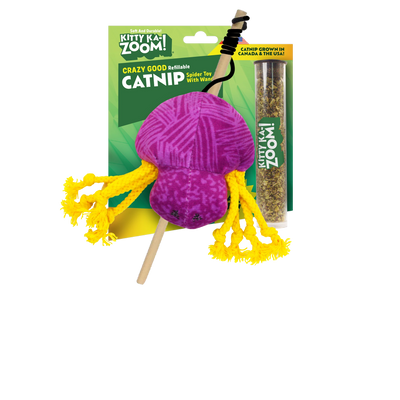
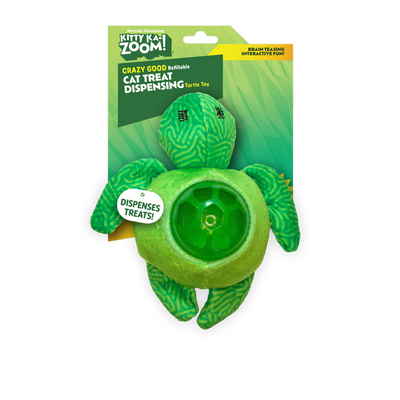
The right equipment covers three kinds of movement: sprinting, wrestling, and working for food. Our exercise toys guide breaks down which toys pull each type out of a cat, and if yours needs a lot of output to settle, the structured plan for high-energy cats covers physical and mental energy at once.
Shop the Tools
The five signs a session actually worked
One of the most common mistakes is misjudging how a session went. If your cat walked away after five minutes, did it fail, or did they complete the cycle and check out naturally? If they're still active an hour later, did you give them enough, or was the session too passive to burn through their energy?
There are a handful of reliable signals that a session was genuinely productive. Run through this checklist after your next few sessions and you'll start to get a much clearer read on what's working.
Session Quality Check
Did That Play Session Actually Work?
Check off what happened during your last session. Get an instant read on how well it landed.
- ✓ My cat approached or was already watching before I even picked up the toy
- ✓ I saw stalking, pouncing, or a grab-and-kick
- ✓ My cat groomed or flopped down after the session
- ✓ My cat stayed engaged for at least 2 minutes without walking away
- ✓ My cat seemed settled afterward — not frantically pacing or demanding more
Perfect Session
- Note what time of day this happened — cats have peak windows and repeating the timing helps
- Whatever toy you used, keep it in rotation; don't let it sit out between sessions or it loses novelty
- If you want to extend enrichment without adding another active session, a treat dispenser handles the gap well
Really Solid
- Didn't approach beforehand: try initiating play after a nap rather than at random times
- No stalking or pouncing: slow the toy down more at the start; fast movement can actually freeze some cats
- No post-session groom or flop: the session may have ended abruptly — try slowing the toy over the last 60 seconds
Something to Adjust
- Try switching to a wand toy if you've been using floor toys; movement variety makes a big difference
- Test the same session 30 minutes after your cat's next nap — timing relative to sleep is often the real issue
- Cut the session length in half and increase the movement intensity; boredom looks a lot like disinterest
Something's Off
- Don't repeat the same session format; if this approach isn't working, a different toy type is worth trying first
- Check in with your vet if your cat has stopped engaging with play they used to enjoy — it can be an early signal of pain or illness
- For cats who need mental enrichment without active play, a treat dispenser gives them a job to do on their own schedule
A few things that throw off the math
The guidelines above assume reasonably consistent daily activity. In practice, there are a few situations that change the calculation:
Multiple cats in the house. Cats in a multi-cat home sometimes exercise each other, but that doesn't always mean they're getting good predatory movement. Chase-and-wrestle between cats is social play, not hunting. Most cats still benefit from individual interactive sessions with a human. If yours actively avoids the other cat or is being chased more than chasing, individual sessions are especially important.
Indoor-only cats. Without the natural stimulus variation of an outdoor environment, indoor cats depend entirely on you for their exercise. That doesn't mean doubling session time, but it does mean rotating toys, varying the type of movement, and making sure sessions are genuinely active rather than going through the motions.
After a vet visit, illness, or stressful change. Activity drive can drop significantly when a cat is stressed or under the weather. Don't push sessions during these periods. Offer the toy, let them set the pace, and return to normal frequency as they settle back in.
Seasonal changes. Many cat owners notice their cats are more active in spring and fall and more sedentary in summer heat. Adjust session timing (earlier morning, later evening) rather than duration during warmer months.
The bottom line: treat the time ranges as a starting point, not a hard rule. Watch how your cat responds over a week or two and you'll have much better data than any general guideline can give you.


0 comments