

It's 6 AM and there's a damp toy fish on your pillow, delivered by a cat who is now announcing the achievement at volume. Why do cats bring you toys? It's one of the most-asked questions in cat ownership, usually right after it happens for the first time, and the answer is better than the folklore: the delivery is one of the friendliest things a cat does, and how you respond decides whether it stays a charming quirk or becomes an actual game.
What the toy delivery actually means
The honest framing first: nobody can interview the cat, so this is behavior science plus well-founded reading of context. The leading explanations all point somewhere warm. The most common is the play invitation: a cat who drops a toy at your feet and looks at you is asking to start a session, the same way they'd solicit play from another cat. There's the trophy theory: hunting is the headline event of a cat's day, and carrying the "kill" to the social center of the territory (you) is a victory lap. There's the sharing instinct, echoing how mother cats carry prey back for kittens. And for many cats it's a learned loop: toy delivery earned attention once, so the behavior stuck. In most households it's some blend, and all of the blends are compliments.
The etiquette: how to respond
Rule one: accept the gift. Whatever the mix of motives, the delivery is social, and a cat whose deliveries get ignored eventually stops making them, which closes a door you want open. The full response costs thirty seconds: acknowledge the toy, make a fuss, and when you can, convert it into a short play session, because the cat who brings a toy is often a cat asking for exactly that. The deliveries that wake you at 6 AM get the same grace plus a schedule fix: a real play session the evening before (ending with a catch and a meal) moves the celebration to hours you're conscious for.
Yes, some cats play fetch
The delivery habit has a famous upgrade: a meaningful share of cats retrieve, many of them self-taught, and "do cats play fetch" has the delightful answer of yes, plenty do, entirely on their own terms. Fetch cats tend to pick it up young, often with one specific favorite toy, and the behavior is the full delivery loop with a return trip added: chase, catch, carry back, demand re-throw.
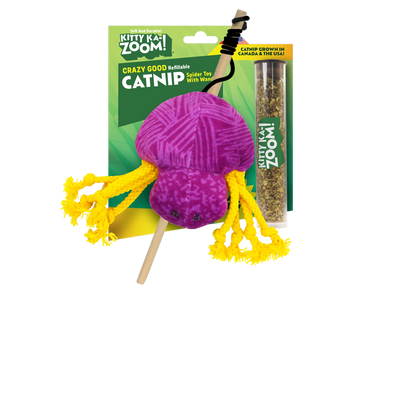
If your cat delivers toys, you have a candidate. The training is mostly cooperation: use a light, carryable toy (this is exactly what the multipack fish are built like), throw it a short distance while the mood is playful, and celebrate any return, even a partial one, with an immediate re-throw, because for a fetch cat the throw itself is the reward. Keep sessions short, quit while they're winning, and never force the return; cats play fetch as long as it stays their idea. Some cats never retrieve, and that's temperament, not failure.
The Retrieval Kit


When the delivery means something else
A couple of variants worth reading correctly. The 3 AM toy-plus-yowling combo is less about the gift and more about unspent energy on a nocturnal schedule; our energy timeline and the evening hunt-catch-eat routine fix that one. And toys delivered into the food bowl or water dish aren't confused behavior: caching prize possessions in the "safe" core of the territory is normal cat logic, soggy fish and all.
The takeaway
A cat who brings you toys is a cat who's made you part of their hunt, which is about as high as feline compliments go. Accept the gift, pay it back with a session, and if there's a retriever in there, the games list has the technique to grow it. Keep a couple of light, carryable toys in the rotation (the refillable lineup has the right weight class), and the 6 AM ceremony becomes the best part of the morning. Eventually.


0 comments