

Most cat toys have a short shelf life. A crinkle ball rolls under the couch. A disposable stuffed mouse gets chewed apart by Tuesday. A feather wand loses its feathers. And then you're buying replacements again.
Refillable cat toys work differently. The toy stays intact; the thing that makes it interesting gets replenished. It's a design that pays off over time, especially for cats that burn through novelty fast.
How refillable cat toys actually work
Most refillable designs use a zippered pouch or velcro pocket built into the toy body. You stuff it with loose catnip or a silvervine blend, or mist the outside with a catnip spray, and the toy absorbs the scent. As the effect fades, you refresh it.
The result: same toy, fresh experience. A cat that's lost interest after a week can be re-engaged with a refill instead of a replacement.
Two types, two different jobs
Refillable toys fall into two rough categories, and which one works depends on how your cat likes to play.
Interactive wand toys have a refillable body attached to a wand handle. You control the motion. The cat chases, swipes, and leaps. The catnip inside the toy body gives them a scent target during the chase. These require you to be present; they won't entertain a cat solo.
Kicker and plush kneading toys are built for solo play. Cats grab them with their front paws, rake with their back feet, and wrestle freely. These work without any human involvement, which makes them useful for cats that need stimulation while you're busy. The refill pocket means a cat can find them interesting again after ignoring them for a while.
What to put in the refill pocket
The scent you load into the toy affects how hard your cat engages. Three main options:
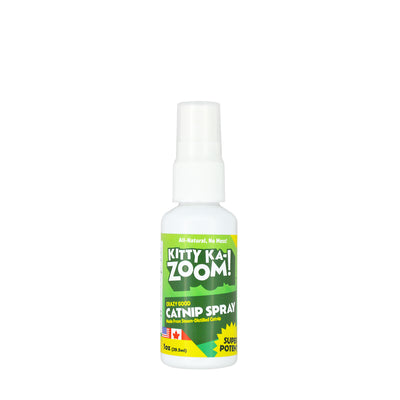
Catnip spray is the fastest refresh. A few spritzes on the outside of the toy, or into the pocket, delivers a quick burst. It works well right before a play session but tends to fade faster than a loose fill.
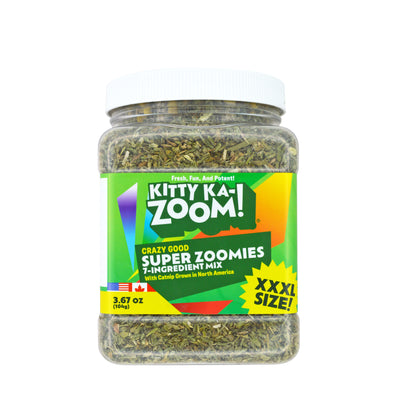
Loose catnip blends go directly into the pocket and provide a slower, more sustained release. A cat can nose at the toy throughout the day and keep catching scent traces. Blends that include silvervine or valerian tend to hold attention longer than straight catnip.
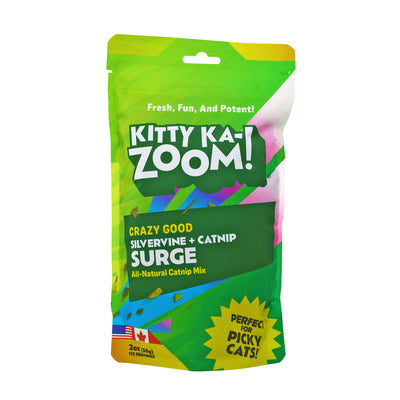
Silvervine-forward blends are worth trying if your cat doesn't respond to catnip. Silvervine triggers a different receptor set, and many catnip-indifferent cats respond strongly to it. If you haven't tried silvervine yet, the Zoomie Snake Kicker paired with Silvervine Surge is a good starting point.
One practical note: the pocket doesn't need to be packed tight. A light fill is enough. Overstuffing can make the toy stiff and harder to bat around.
The Kitty Ka-Zoom! Zoomie lineup
Every toy in the Zoomie line is refillable. They're built for cats that play hard and get bored fast.
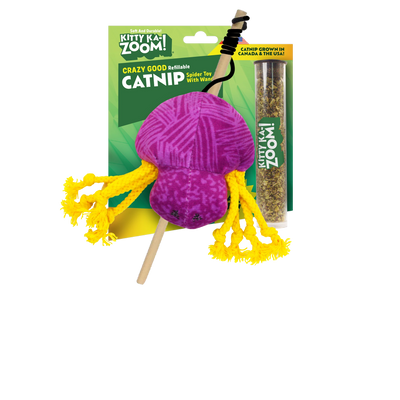
- Zoomie Spider with Wand — The wand toy in the lineup. Interactive by design; you control the hunt.
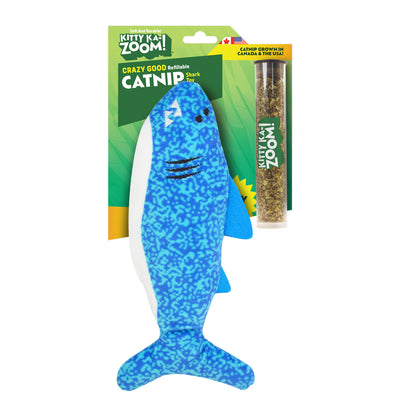
- Zoomie Shark — A solid kicker with some size to it. Works well for larger cats or strong bunny-kickers.
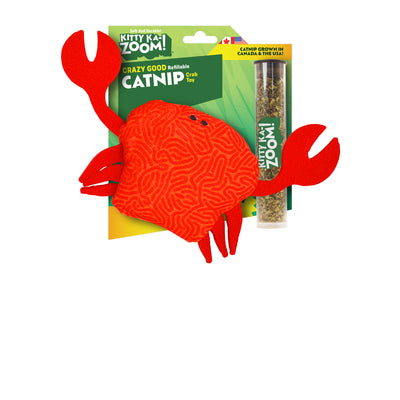
- Zoomie Crab — Wide-body kicker, good for cats that like to wrap all four paws around their prey.
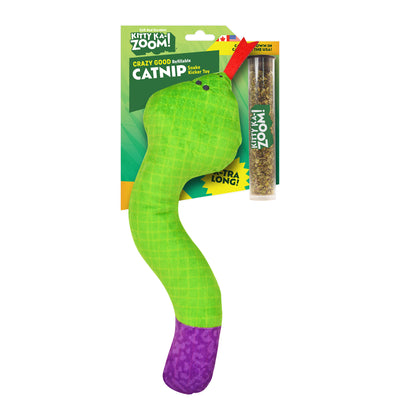
- Zoomie Snake Kicker — Long, narrow profile. Ideal for silvervine pairings and cats that like to carry and drag.
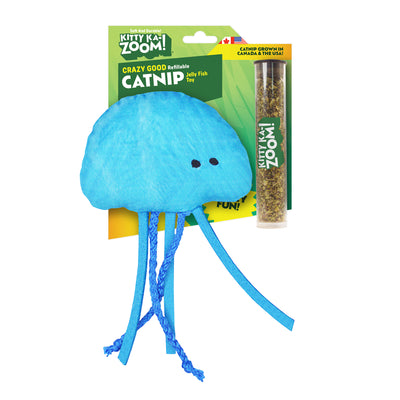
- Zoomie Jellyfish — Compact and lightweight. Easier for smaller cats to toss and chase.
- Lizard Kicker — Slim profile, good grip for pawing and carrying between rooms.
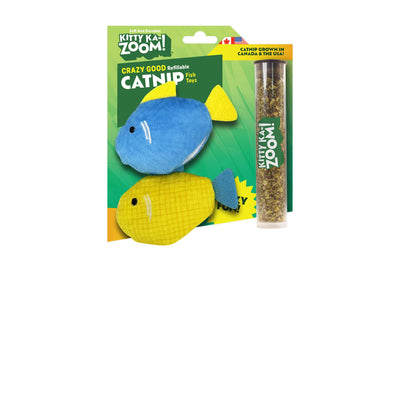
- Zoomie Multipack Fish — A set of small fish kickers. Good for spreading toys around the house or for multi-cat households.
The Zoomie Lineup
Keeping the refill working
A refillable toy that's lost its scent isn't broken, it just needs a refresh. Most setups need a top-up every two to three weeks, though a cat that plays with a toy daily will burn through the scent faster.
One thing to watch: cats can lose interest in a toy they associate with nothing interesting, even after a refill. If you refresh a kicker and your cat still ignores it, try sealing it in a bag with fresh catnip overnight before giving it back. The concentrated exposure resets the association.
For more on getting the most out of play sessions, the guide to tiring out a hyperactive cat covers session structure and timing.
Refill Options


0 comments