

An indoor cat doesn't get to patrol territory, stalk real prey, or chase anything that wasn't deliberately put there. Every one of those instincts is still running. The hardware doesn't go away because the cat lives inside. What changes is that toys have to activate those drives, because nothing else will.
The right indoor toy stack isn't about quantity. It's about hitting every stage of the prey sequence: spot it, stalk it, chase it, catch it, wrestle it, and get a reward. Toys that only hit one or two of those stages feel hollow fast — and a bored cat finds other outlets.
What separates toys that keep working from toys that don't
Three things make the difference between a toy that stays in rotation for months and one that gets ignored by Thursday:
Durability under real play. Cats without outdoor outlets play hard. A toy that shreds in two sessions isn't a deal — it's a cost-per-use problem. Look for reinforced stitching and materials rated for active, repetitive use.
Scent longevity. Cats are primarily scent hunters. A toy with fresh catnip or silvervine in the pocket activates actual prey-drive behavior. A dry, scentless toy is just an object. Refillable catnip pockets are the single feature that separates toys that stay interesting from ones that get abandoned after a week.
Format variety. No single toy covers every play mode. A kicker covers the wrestle instinct. A wand toy covers the chase. A treat dispenser covers problem-solving. A complete indoor setup has at least one from each category.
Liquid error (sections/main-article line 715): Could not find asset snippets/kk-widget-indoor-toy-finder.liquidCategory 1: Wand toys for guided chase
Wand toys are the highest-intensity option because you control the motion. You can run a cat hard in 10 minutes — full sprints, jumps, direction changes — in a way no solo toy replicates. They're the fastest path to a genuinely tired cat.
The trade-off is that you have to be holding it. Wand toys are best used as the anchor for one or two focused daily sessions, with solo toys covering the rest of the day.
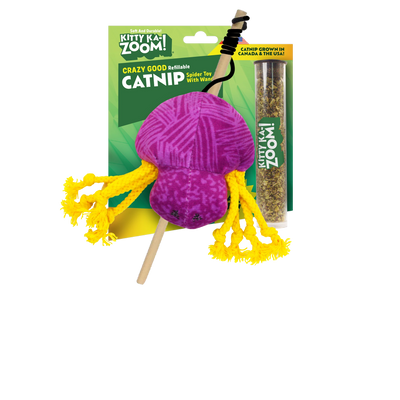
The Zoomie Spider with Wand has a refillable body. The catnip pocket in the spider stays fresh with a refill instead of requiring a whole new toy. A familiar toy with renewed scent gets a different kind of attention than something brand new, and it's more cost-effective long-term.
Wand and Teaser Play
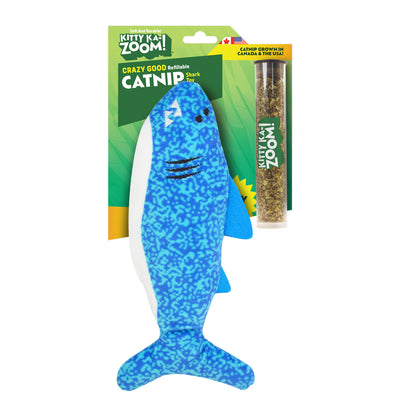
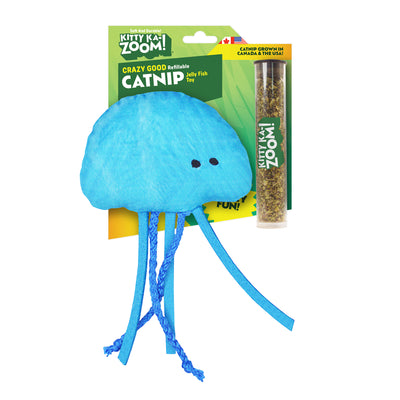
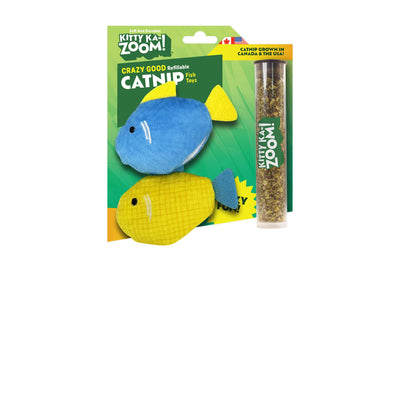
Category 2: Refillable kickers and plush for solo play
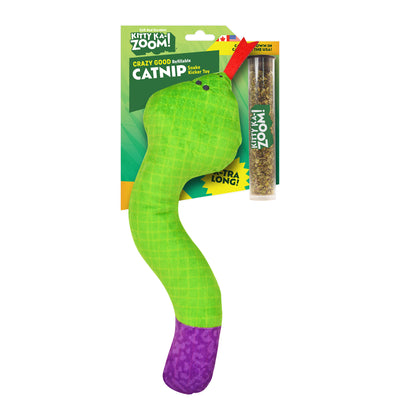
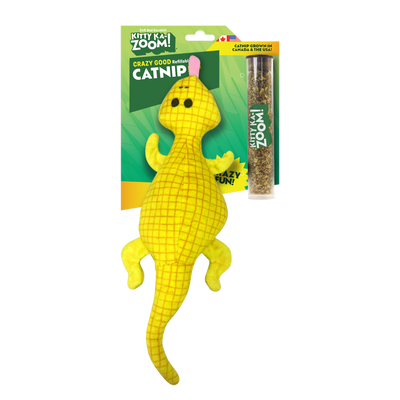
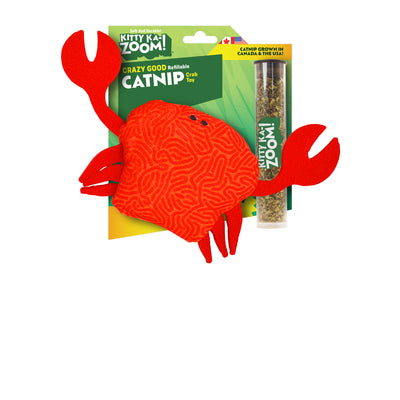
Kicker toys handle the hours you're not available. They're designed for the full bunny-kick sequence: front paws grab, back legs rake. That's not a passive bat-and-ignore — it's a complete physical engagement that can run for 10-15 minutes of solo play when the toy has fresh scent.
Long shapes (Snake Kicker, Lizard Kicker) double as carry toys. A cat will grab one, run it to another room, work it there, and come back. Compact shapes (Crab, Shark, Squid) are better for batting and pouncing — cats that don't do the full body-wrap still engage hard with these.
All of them have refillable catnip pockets. A fresh fill every couple of weeks keeps each toy in active rotation instead of getting abandoned when the scent fades.
Refillable Solo Toys
Category 3: Treat dispensers for mental work
Physical play drains the body. Puzzle play drains the mind. A cat that's solved a problem settles differently than one that's only run laps, and indoor cats especially need both kinds of outlets.
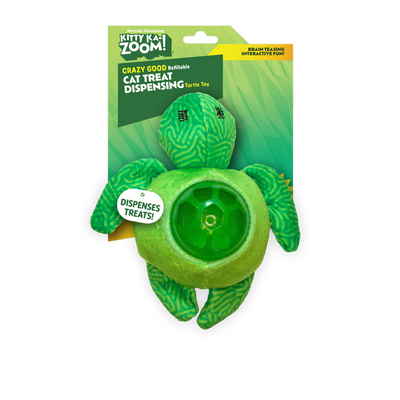
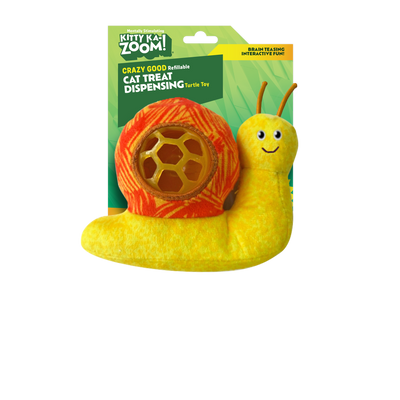
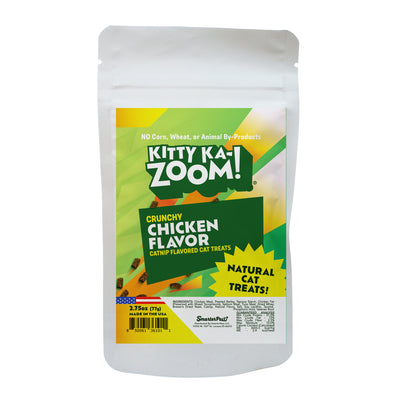
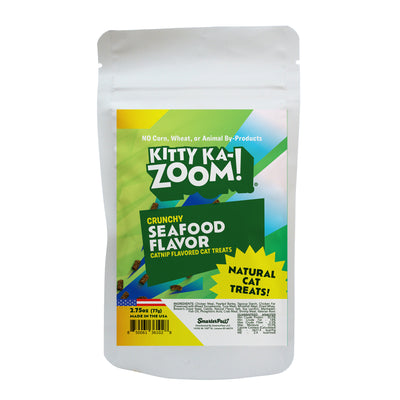
The Zoomie Sea Turtle is a rolling treat dispenser with adjustable difficulty. Load it with Ka-Zoomies treats, set the opening easy for the first few sessions, then increase the challenge as your cat figures it out. A 15-20 minute session with a dispenser can produce the kind of calm that 30 minutes of wand play doesn't always reach.
One thing to watch: if your cat gives up in the first 30 seconds, the opening is too tight. Start easier than you think you need to. The goal is engagement, not frustration.
Puzzle and Mental Play
Category 4: Sprays, bubbles, and blends
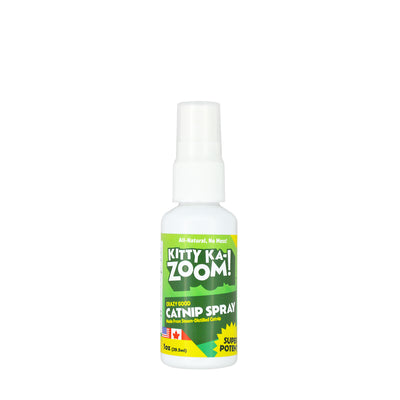
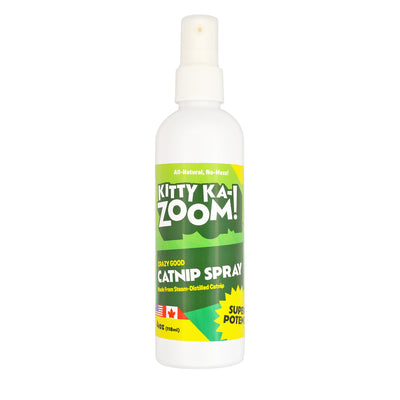
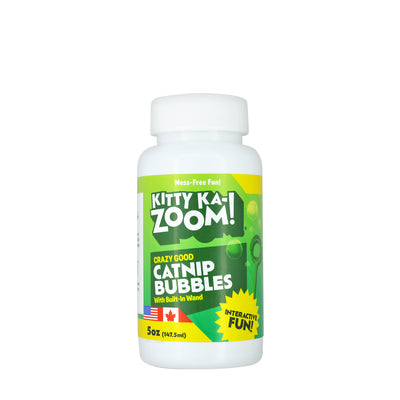
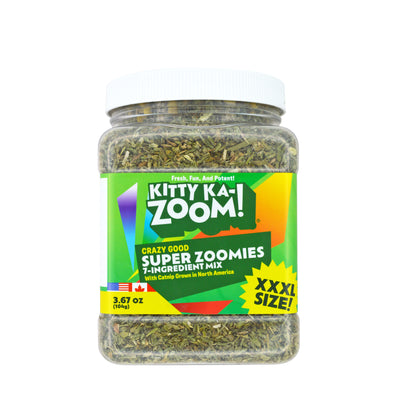
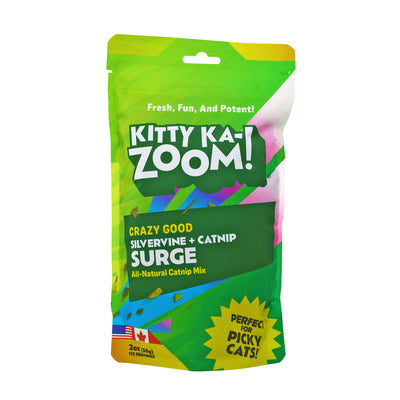
Sprays, bubbles, and loose blends aren't standalone toys. They're multipliers. A kicker with fresh blend in the pocket gets ten times the engagement of a dry one. A room spritzed before a session turns a reluctant cat into an active one. Bubbles are especially useful for cats that play best when they can track motion and scent at the same time.
If your cat responds weakly to one scent, try the other. Catnip and silvervine activate different receptors, and alternating between the two prevents habituation that makes a single scent go stale.
Scent and Blend Boosters
Category 5: Silvervine chews
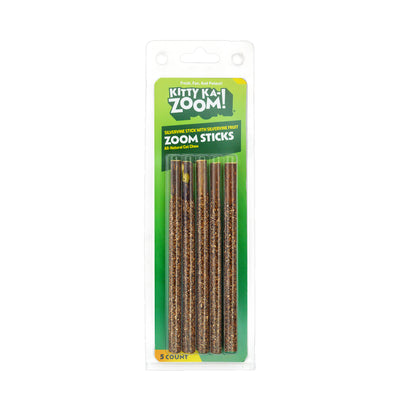
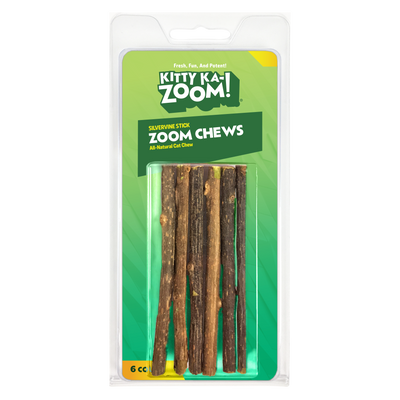
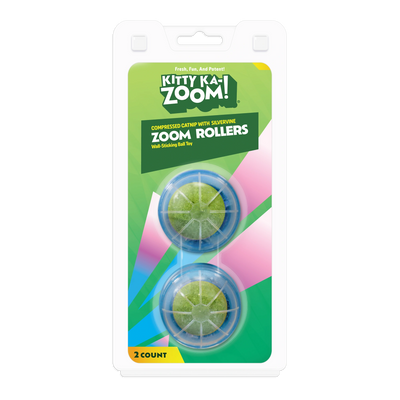
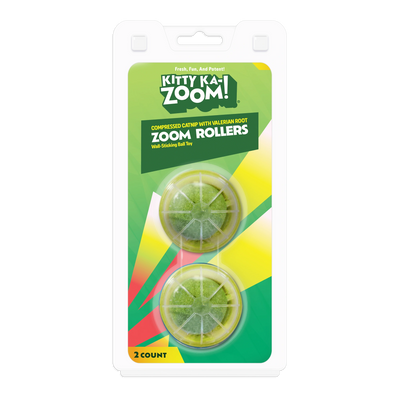
Chewing is a separate drive from chasing or wrestling, and it's one that gets under-served in most indoor setups. Silvervine chew toys (sticks, chews, and rollers) give cats something to rake with their teeth and carry around. They're not scent boosters for other toys — they're the toy.
The different formats serve different cats. Sticks are firm and good for extended gnawing. Zoom Chews are textured for a more active chew. Rollers are compact and easy to bat around between chewing sessions. If you're not sure which format your cat prefers, start with the Zoom Sticks — they have the broadest response rate.
Silvervine Chews
How to rotate so toys stay interesting
The fastest way to kill toy engagement is to leave everything out all the time. Cats habituate to a static environment. If the same toys are in the same spots every day, they become part of the furniture.
A simple rotation: divide the collection into three groups. Rotate one group out every few days. When toys return after a break, they register as novel again. Combine rotation with scent refreshes and you get significantly more play time per toy without buying more.
Building the right setup for your cat
There's no single stack that works for every indoor cat. A senior cat that plays gently for 10 minutes needs a different kit than a three-year-old that laps the apartment at midnight. The common thread is variety: something to chase, something to wrestle, something to solve, and something to smell.
Start with one wand toy and one kicker. See which gets more use. Add the treat dispenser once the physical outlets are covered. Build the scent toolkit as you figure out what your cat responds to best.


0 comments